The Australian Crayfish Project (ACP)
Project No: 100001
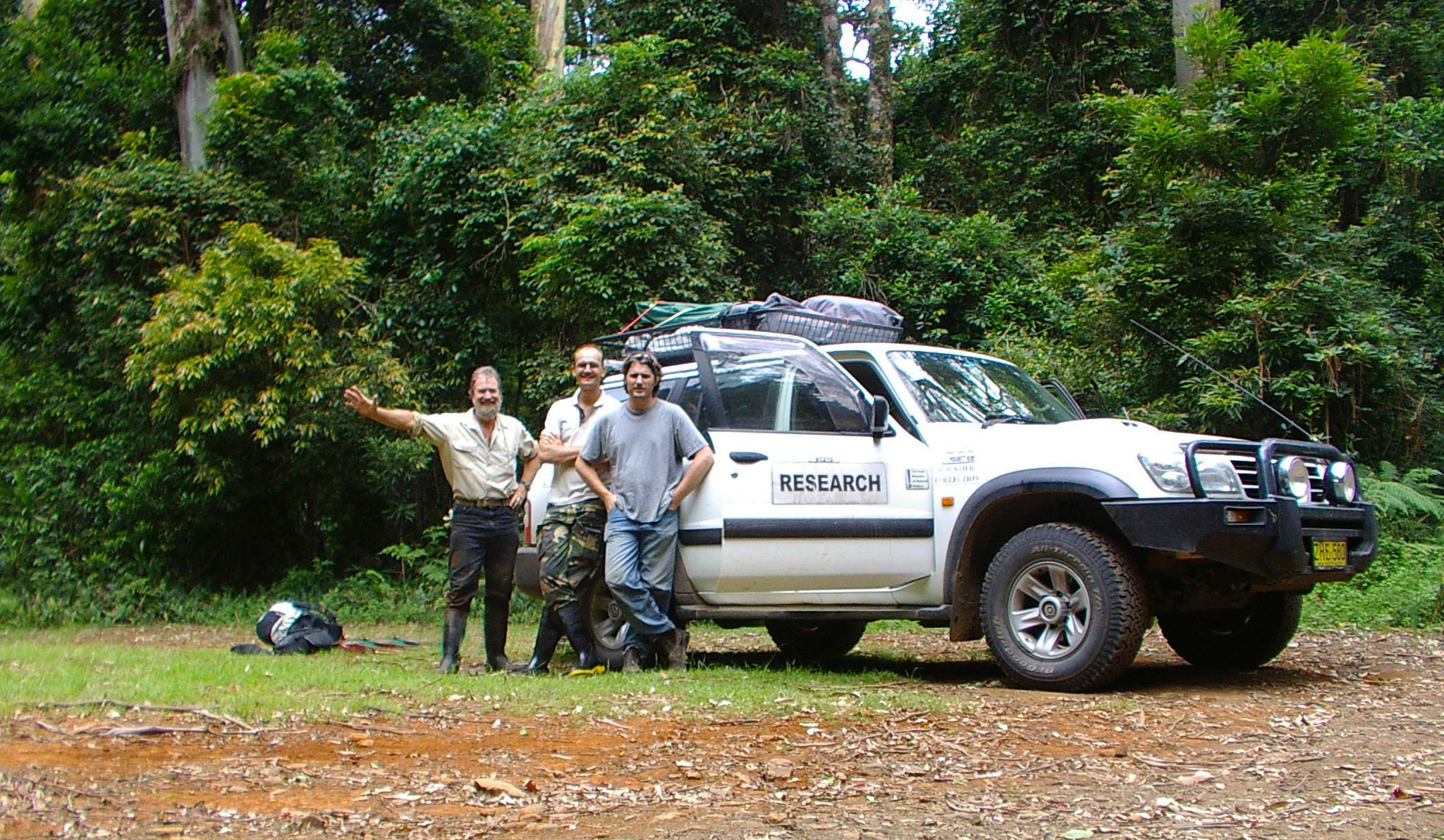
The Australian Crayfish Project (ACP) is a privately funded, not for profit project, run entirely by volunteers with a thirst for knowledge on freshwater crayfish. We all freely give our time and resources to support the project. Started in 2005 it will run to 2025 and probably beyond. The aim of this project is to find and identify every species of freshwater crayfish, and document their biology, distributions and habitat requirements. We will publish the research results to increase the knowledge base on all our species and provide the scientific evidence our management authorities need to ensure the crayfish and their habitats are protected and conserved for all time. Australia has one of the most diverse ranges of freshwater crayfish species on the planet yet there is much confusion with the description and distribution of species and many species remain undiscovered & undescribed.
The project objectives are:
1.To conduct aquatic biological surveys across Australia, sampling as many sites as possible to determine the species present.
2.Search for & collect specimens of new species and new distributions across Australia.
3.Record each species, habitat, activities & lifecycle.
4.Photograph every species to give a photographic record/description of each species.
5.Identify every species via taxonomy.
6.Identify every species via DNA testing and compile and complete a DNA data base for all Australian freshwater crayfish species.
7.Identify, name and describe all new species collected.
8.Investigate and ascertain the distribution of all species and provide population estimates of our rarer species.
9.Identify the threats (both current and potential) and the conservation status of all species of Freshwater Crayfish in Australia.
10.Help to Protect and Conserve all species of freshwater crayfish and their habitats and warn of the threats from translocated crayfish species.
11.Generally increase the profile and knowledge base on freshwater crayfish and their habitat and produce books on the Freshwater Crayfish of Australia
12. Help to educate the general public on Australia’s unique crayfish and their importance as keystone species which have a disproportionately large effect on the whole catchment relative to their abundance. They play a critical role in maintaining the structure of the whole ecological community, their prosperity and abundance directly affecting the health and abundance of numerous other species (macroinvertebrates, fish, eels, turtles, lizards, snakes, water rats, platypus and birds, to name just a few) in the ecosystem.
The Australian Crayfish Project is evolving, as it progresses with more support and resources being offered and as more researchers become involved, the scope of the project broadening to include all freshwater crustacea.
The ACP is a privately funded program that only continues with the financial support of crayfish enthusiasts and environmental groups. We accept donations and sponsorship from anyone as every cent helps us help the crayfish and their fragile habitat areas. Every cent helps and is fully tax deductable so if you can donate or sponsor a specific project please drop us an email and help us help the crayfish and the forests in which the live or just contribute a few dollars.

Please give a contribution to fund further research and conservation of Australia’s freshwater crayfish
We rely on the help and assistance of volunteers so get involved, have a look at the current projects list and volunteer to help out on specific research projects or areas. If you have an unusual crayfish in your area let us know, it could be a new species. The project is discovering dozens of new species or new populations that were never known to exist. Our aim is to find and identify all species of freshwater crayfish and their habitat, the bottom line is that if no one knows these species are there and they don’t even have a name then how can they be protected and conserved into the future? The results of this project will ensure that all management agencies take the crayfish and their habitat into consideration for future environmental, conservation, development and catchment management plans, etc.
The project currently is supported by and has scientific permits issued by:
NSW Industry & Investment (100% NSW)
Queensland Department of Primary Industries and Fisheries. (100% Qld)
Victorian Department of Primary Industries – Fisheries Victoria. (100% Vic)
South Australian Primary Industries and Resources.(100% SA)
NSW DECC – National Parks & Wildlife Service. (100% NSW)
Victorian Department of Sustainability and Environment. (100% Vic)
Australian Government – Department of Environment, Water, Heritage and the Arts.
Norfolk Island Government – Norfolk Island National Parks.
Qld Department of Environment and Resource Management-Wet Tropics
Qld Environmental Protection Agency
The Project is currently collaborating with and supported by volunteer researchers or scientists from,
Australian Museum,
Arthur Rylah Institute for Environmental Research
Macquarie University
Carnegie Museum of Natural History (USA)
Blue Mountains Council
Queensland Museum
James Cook University
Southern Rivers Catchment Management Authority
Earthan Group
For further information see the research projects or check out the Newsletters/articles/blog.
Results of AABio Project surveys are included in the Atlas of NSW Wildlife database, the Victorian Biodiversity Atlas (VBA) and the Queensland government’s (WildNet). The Queensland government’s wildlife database (WildNet) contains recorded wildlife sightings and listings of plants, fungi, protists, mammals, birds, reptiles, amphibians, freshwater fish, marine and cartilaginous fish, butterflies and other priority invertebrates in Queensland. The VBA is the web-based information system designed to manage information about wildlife in Victoria. The system includes species attribute information, including origin and conservation status, along with more than six million records of species distribution and abundance from systematic surveys and general observations. The Atlas of NSW Wildlife (Atlas) is the Office of Environment and Heritage’s (OEH’s) database of flora and fauna records. The Atlas contains records of plants, mammals, birds, reptiles, amphibians, some invertebrates (such as insects and snails listed under the Threatened Species Conservation Act) and some fish.
I hope you all recognise and appreciate the unique biodiversity of our Australian Freshwater Crayfish, and share our concern for the future of so many of the species that are under threat. Our crayfish are only found in Australia and some of these species have tiny populations in only miniscule areas, once these crayfish are gone they are gone for all time. Please do your bit to conserve them for all Australians for all eternity.
For Further information on the ACP go to the website “AUSTRALIAN CRAYFISH PROJECT”
Contact the ACP
Rob McCormack PO Box 3 Karuah NSW 2324 Ph/Fax: 02 4997 5160 Email: acp@aabio.com.au